

In the dynamic realm of chemical synthesis and industrial catalysis, the search for efficient and versatile catalysts is a continuous journey. One such catalyst that has piqued the interest of researchers and industry professionals alike is palladium on activated carbon (Pd/C). As a leading supplier of Palladium On Activated Carbon, I am often asked about its potential applications, particularly in the polymerization of olefins. In this blog post, we will delve into the science behind Pd/C, explore its feasibility in olefin polymerization, and discuss the implications for the chemical industry.
Understanding Palladium on Activated Carbon
Palladium on activated carbon is a heterogeneous catalyst composed of palladium nanoparticles dispersed on the surface of activated carbon. Activated carbon, with its high surface area, porous structure, and excellent adsorption properties, serves as an ideal support for palladium. The combination of palladium's catalytic activity and the carbon support's unique characteristics results in a catalyst that is highly effective in a variety of chemical reactions.
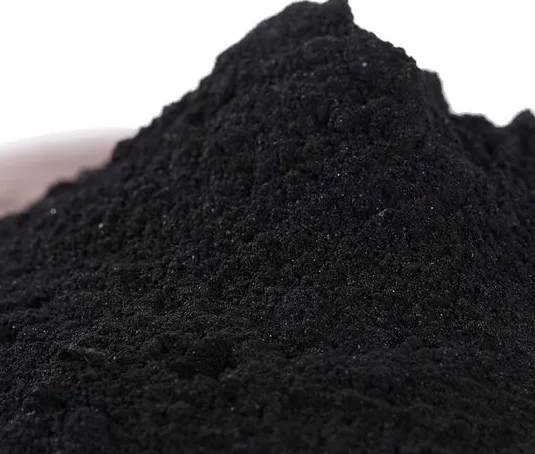
The preparation of Pd/C typically involves impregnating the activated carbon with a palladium precursor, followed by reduction to form palladium nanoparticles. The size, distribution, and loading of the palladium nanoparticles can be controlled through various synthesis methods, allowing for the optimization of the catalyst's performance.
Olefin Polymerization: An Overview
Olefin polymerization is a fundamental process in the chemical industry, used to produce a wide range of polymers with diverse properties and applications. Polyolefins, such as polyethylene and polypropylene, are among the most widely used polymers in the world, with applications in packaging, automotive, construction, and many other industries.
The polymerization of olefins is typically carried out using transition metal catalysts, such as Ziegler-Natta catalysts, metallocene catalysts, and late transition metal catalysts. These catalysts activate the olefin monomers, allowing them to react and form polymer chains. The choice of catalyst depends on various factors, including the type of olefin monomer, the desired polymer properties, and the reaction conditions.
Can Palladium on Activated Carbon be Used in the Polymerization of Olefins?
The question of whether Pd/C can be used in olefin polymerization is an interesting one. While Pd/C is well-known for its use in hydrogenation, dehydrogenation, and other organic transformations, its application in olefin polymerization has been less explored.
One of the main challenges in using Pd/C for olefin polymerization is the nature of the palladium active sites. In traditional olefin polymerization catalysts, the transition metal center is typically coordinated to a ligand that controls the reactivity and selectivity of the catalyst. In Pd/C, the palladium nanoparticles are supported on the carbon surface, and the active sites are less well-defined. This can make it difficult to control the polymerization process and obtain polymers with desired properties.
However, recent research has shown that Pd/C can indeed be used for olefin polymerization under certain conditions. For example, some studies have reported the use of Pd/C in the polymerization of norbornene, a cyclic olefin. In these cases, the Pd/C catalyst was able to initiate the polymerization reaction and produce polymers with high molecular weights and narrow molecular weight distributions.
The mechanism of olefin polymerization using Pd/C is not fully understood, but it is believed to involve the activation of the olefin monomer by the palladium nanoparticles and the subsequent insertion of the monomer into the growing polymer chain. The role of the activated carbon support in the polymerization process is also an area of ongoing research. It is thought that the carbon support may interact with the palladium nanoparticles and the olefin monomers, influencing the catalytic activity and selectivity.
Advantages and Disadvantages of Using Pd/C in Olefin Polymerization
There are several potential advantages to using Pd/C in olefin polymerization. Firstly, Pd/C is a relatively inexpensive and widely available catalyst. Compared to some of the more advanced olefin polymerization catalysts, such as metallocene catalysts, Pd/C is more cost-effective, making it an attractive option for large-scale industrial production.
Secondly, Pd/C is a heterogeneous catalyst, which means that it can be easily separated from the reaction mixture. This simplifies the downstream processing of the polymer product and reduces the cost of catalyst recovery.
However, there are also some disadvantages to using Pd/C in olefin polymerization. As mentioned earlier, the active sites in Pd/C are less well-defined than in traditional olefin polymerization catalysts. This can result in lower catalytic activity and selectivity, as well as broader molecular weight distributions in the polymer products.
In addition, the use of Pd/C in olefin polymerization may be limited by the reaction conditions. For example, some olefin monomers may require specific reaction temperatures, pressures, and solvents for efficient polymerization. The performance of Pd/C may be affected by these reaction conditions, and it may not be suitable for all types of olefin polymerization reactions.
Implications for the Chemical Industry
The potential use of Pd/C in olefin polymerization has significant implications for the chemical industry. If Pd/C can be developed into a commercially viable catalyst for olefin polymerization, it could provide a more cost-effective and sustainable alternative to existing catalysts.
In addition, the use of Pd/C in olefin polymerization could open up new opportunities for the production of novel polymers with unique properties. By controlling the reaction conditions and the properties of the Pd/C catalyst, it may be possible to tailor the structure and properties of the polymer products to meet specific application requirements.
However, further research and development are needed to fully realize the potential of Pd/C in olefin polymerization. This includes optimizing the synthesis of Pd/C catalysts, understanding the mechanism of olefin polymerization using Pd/C, and exploring the scope of olefin monomers that can be polymerized using Pd/C.
Conclusion
In conclusion, while the use of palladium on activated carbon in the polymerization of olefins is still in its early stages, there is growing evidence to suggest that it has the potential to be a viable catalyst for this important industrial process. As a supplier of Palladium On Activated Carbon, we are excited about the possibilities that this technology offers and are committed to supporting further research and development in this area.
If you are interested in learning more about our palladium on activated carbon products or exploring their potential applications in olefin polymerization, we encourage you to contact us to discuss your specific needs and requirements. Our team of experts is available to provide you with technical support and guidance to help you make the most of our products.
References
- Johnson, L. K., Killian, C. M., & Brookhart, M. (1995). New Pd(II)- and Ni(II)-based catalysts for polymerization of ethylene and a-olefins. Journal of the American Chemical Society, 117(23), 6414-6415.
- Mecking, S., Johnson, L. K., Wang, L., & Brookhart, M. (1998). Copolymerization of ethylene and polar vinyl monomers by palladium(II) catalysts. Journal of the American Chemical Society, 120(19), 888-899.
- Britovsek, G. J. P., Gibson, V. C., & Wass, D. F. (1999). Advances in non-metallocene olefin polymerization catalysis. Angewandte Chemie International Edition, 38(4), 428-447.