

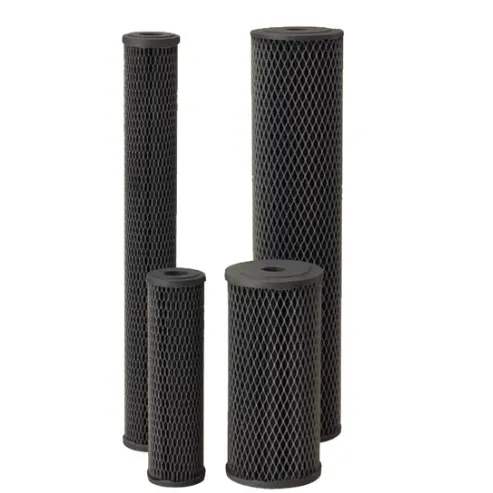
The carbon source of an activated charcoal cartridge plays a pivotal role in determining its overall quality. As a supplier of Activated Charcoal Cartridges, I've witnessed firsthand how the origin of the carbon can significantly impact the performance, efficiency, and durability of these essential filtration components. In this blog post, we'll delve into the various carbon sources used in activated charcoal cartridges and explore how they affect the quality of the final product.
Common Carbon Sources for Activated Charcoal Cartridges
Activated charcoal cartridges can be made from a variety of carbon sources, each with its own unique properties and characteristics. The most common carbon sources include:
Coconut Shell
Coconut shell is one of the most popular carbon sources for activated charcoal cartridges. It is a renewable resource that is widely available and environmentally friendly. Coconut shell charcoal has a high carbon content and a large surface area, which makes it an excellent adsorbent. It is also known for its high hardness and low ash content, which makes it resistant to abrasion and breakage.
Wood
Wood is another common carbon source for activated charcoal cartridges. It is a renewable resource that is widely available and relatively inexpensive. Wood charcoal has a lower carbon content and a smaller surface area than coconut shell charcoal, but it is still an effective adsorbent. It is also known for its high porosity and low density, which makes it lightweight and easy to handle.
Coal
Coal is a non-renewable resource that is widely used in the production of activated charcoal cartridges. It has a high carbon content and a large surface area, which makes it an excellent adsorbent. However, coal charcoal is also known for its high ash content and low hardness, which makes it more prone to abrasion and breakage.
Peat
Peat is a renewable resource that is widely used in the production of activated charcoal cartridges. It has a high carbon content and a large surface area, which makes it an excellent adsorbent. However, peat charcoal is also known for its high moisture content and low hardness, which makes it more prone to mold and mildew.
How the Carbon Source Affects the Quality of Activated Charcoal Cartridges
The carbon source used in an activated charcoal cartridge can affect its quality in several ways, including:
Adsorption Capacity
The adsorption capacity of an activated charcoal cartridge refers to its ability to adsorb and remove contaminants from a fluid or gas stream. The adsorption capacity of a cartridge is determined by the surface area and pore size distribution of the carbon. Coconut shell charcoal has a larger surface area and a more uniform pore size distribution than other carbon sources, which makes it more effective at adsorbing a wide range of contaminants, including volatile organic compounds (VOCs), heavy metals, and odors.
Pore Structure
The pore structure of an activated charcoal cartridge refers to the size, shape, and distribution of the pores in the carbon. The pore structure of a cartridge is determined by the carbon source and the activation process. Coconut shell charcoal has a more uniform pore size distribution and a higher proportion of micropores than other carbon sources, which makes it more effective at adsorbing small molecules, such as VOCs and odors.
Hardness and Durability
The hardness and durability of an activated charcoal cartridge refer to its ability to resist abrasion and breakage. The hardness and durability of a cartridge are determined by the carbon source and the activation process. Coconut shell charcoal has a higher hardness and a lower ash content than other carbon sources, which makes it more resistant to abrasion and breakage. This makes it ideal for use in high-flow applications, where the cartridge is subject to high levels of mechanical stress.
Chemical Resistance
The chemical resistance of an activated charcoal cartridge refers to its ability to resist chemical attack and degradation. The chemical resistance of a cartridge is determined by the carbon source and the activation process. Coconut shell charcoal has a higher chemical resistance than other carbon sources, which makes it more suitable for use in applications where the cartridge is exposed to harsh chemicals, such as acids, bases, and solvents.
Cost
The cost of an activated charcoal cartridge is determined by the carbon source, the activation process, and the manufacturing process. Coconut shell charcoal is generally more expensive than other carbon sources, but it offers superior performance and durability. Wood charcoal and coal charcoal are less expensive than coconut shell charcoal, but they offer lower performance and durability.
Conclusion
In conclusion, the carbon source used in an activated charcoal cartridge can have a significant impact on its quality and performance. Coconut shell charcoal is the preferred carbon source for most applications, as it offers superior adsorption capacity, pore structure, hardness, durability, and chemical resistance. However, the choice of carbon source ultimately depends on the specific requirements of the application, as well as the budget and performance expectations of the customer.
As a supplier of Activated Charcoal Cartridges, we offer a wide range of cartridges made from different carbon sources to meet the needs of our customers. Our cartridges are manufactured using the latest technology and highest quality materials to ensure superior performance and reliability. If you're interested in learning more about our activated charcoal cartridges or would like to discuss your specific requirements, please contact us today. We look forward to working with you!
References
- "Activated Carbon: Principles, Production, and Applications." By S. K. Bhatia.
- "Carbon Materials for Advanced Technologies." Edited by M. S. Dresselhaus, G. Dresselhaus, and A. J.orio.
- "Adsorption by Carbons." By K. S. W. Sing and D. H. Everett.