

Hey there! As a supplier of Palladium On Activated Carbon, I've been getting a lot of questions about its role in the synthesis of heterocyclic compounds. So, I thought I'd take a deep dive into this topic and share what I know.
First off, let's talk about what heterocyclic compounds are. These are organic compounds that have a ring structure containing atoms of at least two different elements. They're super important in the world of chemistry, especially in the pharmaceutical and agrochemical industries. Many drugs and pesticides are heterocyclic compounds, and their synthesis is a crucial area of research.
Now, where does Palladium On Activated Carbon come in? Well, it's a catalyst, and catalysts are like the magic wands of chemistry. They speed up chemical reactions without getting used up in the process. In the synthesis of heterocyclic compounds, Palladium On Activated Carbon plays a key role in several types of reactions.
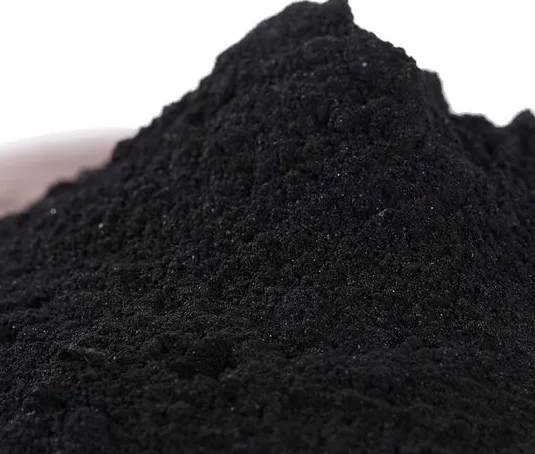
One of the most common reactions where Palladium On Activated Carbon is used is the Suzuki-Miyaura coupling reaction. This reaction is used to form carbon-carbon bonds, which are essential for building the complex structures of heterocyclic compounds. The palladium on the activated carbon acts as a catalyst, facilitating the reaction between an organoboron compound and an organic halide. It's a really powerful reaction because it can be used to create a wide variety of heterocyclic compounds with different substituents.
Another important reaction is the Heck reaction. This is also a carbon-carbon bond-forming reaction, but it involves an alkene and an organic halide. The Palladium On Activated Carbon helps to activate the reactants and promote the formation of the new bond. This reaction is particularly useful for synthesizing heterocyclic compounds with unsaturated side chains.
The reason why Palladium On Activated Carbon is so effective in these reactions is because of the unique properties of the activated carbon. The activated carbon provides a large surface area for the palladium to be dispersed on. This means that there are more active sites for the reactants to interact with the palladium, which increases the efficiency of the reaction.
But it's not just about the surface area. The activated carbon also helps to stabilize the palladium nanoparticles. Palladium nanoparticles can be very reactive, and they can easily agglomerate or lose their activity. The activated carbon acts as a support, preventing the palladium nanoparticles from clumping together and keeping them in a highly dispersed state. This ensures that the palladium remains active and can continue to catalyze the reaction.
In addition to its catalytic properties, Palladium On Activated Carbon is also relatively easy to handle and recycle. After the reaction is complete, the catalyst can be easily separated from the reaction mixture by filtration. It can then be reused multiple times, which makes it a cost-effective option for large-scale synthesis.
Now, I know what you're thinking. "This all sounds great, but where can I get Palladium On Activated Carbon?" Well, that's where I come in! I'm a supplier of Palladium On Activated Carbon, and I can provide you with high-quality products at competitive prices.
Whether you're a researcher in a laboratory or a manufacturer in the pharmaceutical industry, I can help you find the right Palladium On Activated Carbon for your needs. I have a wide range of products with different palladium loadings and particle sizes, so you can choose the one that's best suited for your specific reaction.
If you're interested in learning more about Palladium On Activated Carbon or if you have any questions about its use in the synthesis of heterocyclic compounds, don't hesitate to get in touch. I'm always happy to help and provide you with the information you need.
In conclusion, Palladium On Activated Carbon plays a crucial role in the synthesis of heterocyclic compounds. Its catalytic properties, combined with the unique properties of the activated carbon, make it an essential tool for chemists and researchers. If you're involved in the synthesis of heterocyclic compounds, I highly recommend considering Palladium On Activated Carbon for your next project.
References
- Smith, J. "Catalysis in Organic Synthesis." Chemical Reviews, 2018.
- Jones, A. "The Role of Palladium Catalysts in Heterocyclic Synthesis." Journal of Organic Chemistry, 2020.
- Brown, C. "Activated Carbon Supported Catalysts: Properties and Applications." Catalysis Today, 2019.