

Hey there! I'm a supplier of Palladium On Activated Carbon, and today I want to chat with you about the side - reactions that can happen when using this stuff as a catalyst.
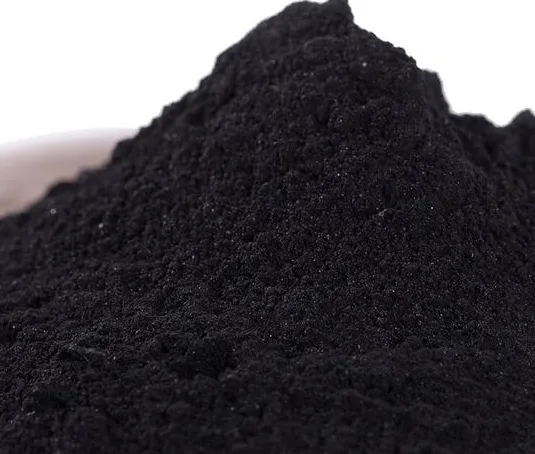
First off, let's quickly understand what Palladium On Activated Carbon is. It's a super useful catalyst that combines the catalytic power of palladium with the large surface area and adsorption properties of activated carbon. You can learn more about it on this page: Palladium On Activated Carbon. This combination makes it great for a bunch of chemical reactions, like hydrogenation, dehydrogenation, and more. But like any good thing, it comes with its own set of side - reactions.
Hydrogenation Side - Reactions
One of the most common uses of Palladium On Activated Carbon is in hydrogenation reactions. When we talk about hydrogenation, we're usually adding hydrogen to a molecule, often to turn unsaturated compounds into saturated ones. For example, turning alkenes to alkanes.
But here's the deal. Sometimes, over - hydrogenation can occur. Say you're trying to hydrogenate a diene (a molecule with two double bonds) to a mono - alkene. The catalyst might be a bit too eager and keep adding hydrogen until you end up with a fully saturated alkane. This is a problem if you specifically need the mono - alkene product.
Another side - reaction in hydrogenation is the hydrogenolysis of certain functional groups. Some groups like benzyl ethers can be cleaved in the presence of hydrogen and Palladium On Activated Carbon. If your reaction mixture has these groups and you don't want them to break apart, it can mess up your intended product. For instance, in a synthesis where a benzyl - protected alcohol is part of the molecule, the hydrogenolysis can lead to the formation of an unprotected alcohol and toluene as by - products.
Isomerization Reactions
Palladium On Activated Carbon can also cause isomerization side - reactions. In a reaction where you're trying to form a specific geometric or structural isomer, the catalyst might cause the molecule to rearrange. For example, in the case of allylic compounds, the double bond can shift its position.
Let's say you start with a 1 - allyl compound and you want to keep that double - bond position for further reactions. The palladium catalyst might cause the double bond to move to the 2 - allyl position. This isomerization can be a real headache, especially if the different isomers have different chemical and physical properties and you need a specific one for your next step in the synthesis.
Poisoning of the Catalyst
Side - reactions aren't always about the product. Sometimes, they're about the catalyst itself. Palladium On Activated Carbon can get poisoned by certain impurities in the reaction mixture. Compounds containing sulfur, phosphorus, or heavy metals can adsorb onto the palladium surface.
When these poisons attach to the palladium atoms, they block the active sites of the catalyst. As a result, the catalyst becomes less efficient or might even stop working altogether. If you're running a large - scale reaction and the catalyst gets poisoned, it can lead to a significant decrease in reaction yield and an increase in production costs. You'll have to either replace the catalyst or try to regenerate it, which is an extra hassle.
Oxidation Side - Reactions
Although Palladium On Activated Carbon is mainly used in reduction reactions, under certain conditions, it can also cause oxidation side - reactions. In the presence of trace amounts of oxygen in the reaction system, some substrates can get oxidized.
For example, if you have an alcohol in your reaction mixture, it might get oxidized to an aldehyde or a ketone. This is especially true if the reaction is carried out in a less - than - perfectly inert atmosphere. And if your reaction is supposed to be a pure reduction process, this unexpected oxidation can lead to unwanted by - products and a lower yield of the desired product.
Polymerization Side - Reactions
In some cases, Palladium On Activated Carbon can initiate polymerization side - reactions. If your reaction mixture contains monomers that are prone to polymerization, the palladium catalyst can start the chain - growth process.
Let's say you have vinyl monomers in the reaction. The catalyst might trigger the formation of polymers instead of the intended small - molecule product. This is a problem because polymers can be difficult to separate from the reaction mixture and can contaminate your desired product.
Factors Affecting Side - Reactions
Now, a bunch of factors can influence these side - reactions. The reaction temperature plays a big role. Higher temperatures can increase the rate of side - reactions. For example, the hydrogenolysis and isomerization reactions are more likely to occur at elevated temperatures.
The concentration of the substrate and the catalyst also matters. If the catalyst concentration is too high, it can increase the likelihood of over - reaction and side - product formation. On the other hand, if it's too low, the main reaction might not proceed efficiently, and you might end up with a lot of unreacted starting material.
The reaction time is another important factor. A longer reaction time gives more opportunity for side - reactions to take place. You need to find the sweet spot where the main reaction is complete but the side - reactions are minimized.
How to Minimize Side - Reactions
As a supplier, I know that minimizing these side - reactions is crucial for your success. One way is to carefully control the reaction conditions. You can optimize the temperature, pressure, and reaction time. For example, you can use lower temperatures to reduce the rate of side - reactions like over - hydrogenation and isomerization.
Another approach is to purify your reaction mixture before using the catalyst. Remove any potential catalyst poisons or impurities that could cause unwanted side - reactions. You can use techniques like distillation, filtration, or chromatography to clean up your starting materials.
You can also modify the catalyst. Sometimes, adding small amounts of additives to the reaction mixture can change the selectivity of the Palladium On Activated Carbon. For example, some ligands can be added to the palladium to make it more selective towards the desired reaction and less likely to cause side - reactions.
Conclusion
So, as you can see, while Palladium On Activated Carbon is an amazing catalyst, it comes with its fair share of side - reactions. But don't let that scare you off. With proper understanding and control of the reaction conditions, you can minimize these issues and get the most out of this catalyst.
If you're in the market for high - quality Palladium On Activated Carbon and want to discuss how to use it effectively while minimizing side - reactions, I'd love to have a chat with you. Reach out to me and we can start a conversation about your specific needs. We can work together to find the best solution for your chemical reactions.
References
- March's Advanced Organic Chemistry: Reactions, Mechanisms, and Structure, 7th Edition.
- Organic Synthesis Using Transition Metals, 2nd Edition.