

Hey there! As a supplier of activated carbon molecular sieves, I've been getting a lot of questions lately about how these nifty little products perform in high - temperature environments. So, I thought I'd sit down and write this blog to share some insights.
First off, let's quickly go over what activated carbon molecular sieves are. They're a type of porous material with a highly developed internal pore structure. This structure allows them to selectively adsorb different molecules based on their size, shape, and polarity. They're used in a wide range of applications, from gas separation and purification to air and water treatment. You can learn more about them on our Activated Carbon Molecular Sieve page.
Now, let's dive into the high - temperature performance. High - temperature environments can be a real challenge for many materials, and activated carbon molecular sieves are no exception. But they do have some unique properties that allow them to hold up pretty well under the heat.
One of the key factors in their high - temperature performance is their thermal stability. Activated carbon molecular sieves are made from carbonaceous materials that have been treated to create a stable structure. This treatment gives them a relatively high resistance to thermal degradation. In general, most activated carbon molecular sieves can withstand temperatures up to a few hundred degrees Celsius without significant structural changes.
However, it's important to note that the performance can vary depending on the specific type of activated carbon molecular sieve. Some are designed to be more heat - resistant than others. For example, those made from high - quality raw materials and with a more uniform pore structure tend to have better thermal stability.
When it comes to adsorption capacity, high temperatures can have a dual effect. On one hand, increasing the temperature can provide more energy to the molecules, making it easier for them to enter the pores of the activated carbon molecular sieve. This can lead to a faster adsorption rate in the initial stages. But on the other hand, as the temperature continues to rise, the adsorption capacity may start to decrease. This is because the adsorbed molecules gain enough energy to break free from the adsorption sites, causing desorption to occur.
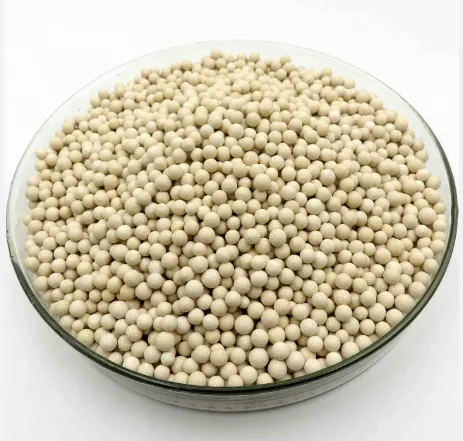
In addition to adsorption, the pore structure of activated carbon molecular sieves can also be affected by high temperatures. At extremely high temperatures, the pores may start to collapse or change in size. This can have a big impact on the selectivity and efficiency of the molecular sieve. For instance, if the pores become too large, the sieve may lose its ability to selectively adsorb certain molecules.
Another aspect to consider is the chemical reactivity of activated carbon molecular sieves in high - temperature environments. Carbon can react with oxygen at high temperatures, leading to oxidation. This oxidation can not only damage the structure of the molecular sieve but also reduce its adsorption performance. To mitigate this, some activated carbon molecular sieves are treated with special coatings or additives to improve their oxidation resistance.
Now, let's talk about some real - world applications where high - temperature performance matters. In the petrochemical industry, activated carbon molecular sieves are often used for gas separation processes. These processes can involve high - temperature gases, and the ability of the molecular sieve to maintain its performance under such conditions is crucial. For example, in the separation of hydrogen from other gases, the molecular sieve needs to be able to work efficiently at elevated temperatures to ensure a high - purity hydrogen product.
In the power generation industry, activated carbon molecular sieves can be used for air purification in high - temperature environments, such as near boilers or turbines. Here, they need to be able to remove pollutants like sulfur dioxide and nitrogen oxides while withstanding the high temperatures generated by the power - generation equipment.
So, if you're in an industry that requires the use of activated carbon molecular sieves in high - temperature environments, it's essential to choose the right product. You need to consider factors like thermal stability, adsorption capacity at high temperatures, and oxidation resistance.
As a supplier, we've spent a lot of time researching and developing activated carbon molecular sieves that can perform well in high - temperature conditions. We offer a range of products with different properties to meet the diverse needs of our customers. Whether you need a highly heat - resistant sieve for a petrochemical process or a more general - purpose one for air purification, we've got you covered.
If you're interested in learning more about our activated carbon molecular sieves or have any questions about their performance in high - temperature environments, don't hesitate to reach out. We're always happy to have a chat and help you find the best solution for your specific application.
In conclusion, activated carbon molecular sieves can show a decent performance in high - temperature environments, but it's important to understand their limitations and choose the right product for your needs. With the right selection and proper use, they can be a valuable asset in many industrial processes.
References:
- "Adsorption Technology and Design" by D. M. Ruthven
- "Carbon Materials for Advanced Technologies" edited by M. S. Dresselhaus, G. Dresselhaus, and A. J. Franklin