

Activated carbon is a highly porous material with a large specific surface area, making it an excellent adsorbent for a wide range of applications, including water purification, air filtration, and gas separation. The porosity of activated carbon plays a crucial role in its adsorption performance, as it determines the accessible surface area and the diffusion pathways for adsorbates. Among the different types of porosity, macroporosity (pores with diameters > 50 nm) is particularly important for applications involving large molecules or high flow rates, as it allows for rapid mass transfer and reduces the pressure drop across the adsorbent bed.
Acid washing is a common post - treatment method used to modify the properties of activated carbon. It involves treating the activated carbon with an acid solution, typically hydrochloric acid (HCl) or nitric acid (HNO₃), to remove impurities such as metals, ash, and surface oxides. In addition to purification, acid washing can also have a significant impact on the porosity of activated carbon, including its macroporosity.
Mechanisms of Acid Washing on Activated Carbon
When activated carbon is subjected to acid washing, several chemical and physical processes occur that can affect its macroporosity.
Dissolution of Inorganic Impurities
One of the primary effects of acid washing is the dissolution of inorganic impurities present in the activated carbon. These impurities, such as metal oxides and salts, can block the pores of the activated carbon, reducing its accessible surface area and porosity. When the activated carbon is treated with acid, the acid reacts with the inorganic impurities, forming soluble salts that can be removed by washing. This process can open up blocked pores, including macropores, and increase the overall porosity of the activated carbon.
For example, if the activated carbon contains iron oxide (Fe₂O₃) impurities, the acid can react with it according to the following equation:
Fe₂O₃ + 6HCl → 2FeCl₃+ 3H₂O
The resulting iron chloride (FeCl₃) is soluble in water and can be easily removed during the washing step, leaving behind open pores.
Etching of the Carbon Matrix
In addition to dissolving inorganic impurities, the acid can also etch the carbon matrix of the activated carbon. The acid can react with the carbon atoms on the surface of the pores, breaking carbon - carbon bonds and creating new pores or enlarging existing ones. This etching process can have a significant impact on the macroporosity of the activated carbon.
The extent of etching depends on several factors, including the type and concentration of the acid, the temperature, and the duration of the acid washing process. Higher acid concentrations and longer treatment times generally result in more extensive etching and a greater increase in macroporosity. However, excessive etching can also lead to a decrease in the mechanical strength of the activated carbon and a loss of its adsorption capacity.
Experimental Evidence of Acid Washing on Macroporosity
Numerous studies have investigated the effect of acid washing on the macroporosity of activated carbon. These studies typically use techniques such as mercury intrusion porosimetry (MIP) and scanning electron microscopy (SEM) to characterize the pore structure of the activated carbon before and after acid washing.
Mercury Intrusion Porosimetry
MIP is a widely used technique for measuring the pore size distribution of porous materials, including activated carbon. In MIP, mercury is forced into the pores of the sample under increasing pressure, and the volume of mercury intruded at each pressure is measured. By analyzing the pressure - volume data, the pore size distribution can be determined.
Several studies have shown that acid washing can increase the macroporosity of activated carbon as measured by MIP. For example, a study by [Author 1] et al. found that acid washing of coconut - shell - based activated carbon with hydrochloric acid resulted in a significant increase in the volume of macropores. The researchers attributed this increase to the dissolution of inorganic impurities and the etching of the carbon matrix.
Scanning Electron Microscopy
SEM is a powerful imaging technique that can provide high - resolution images of the surface and pore structure of activated carbon. By comparing SEM images of activated carbon before and after acid washing, it is possible to visually observe the changes in the macroporosity.
In a study by [Author 2] et al., SEM images of coal - based activated carbon showed that acid washing with nitric acid led to the formation of new macropores and the enlargement of existing ones. The researchers also noted that the surface of the activated carbon became more rough and porous after acid washing, indicating the etching of the carbon matrix.
Impact of Acid - Washed Macroporosity on Adsorption Performance
The increase in macroporosity resulting from acid washing can have a significant impact on the adsorption performance of activated carbon, especially for applications involving large molecules or high flow rates.
Adsorption of Large Molecules
For the adsorption of large molecules, such as dyes, proteins, and polymers, macropores play a crucial role in facilitating the diffusion of the adsorbates into the interior of the activated carbon. The increased macroporosity resulting from acid washing can provide more direct pathways for the large molecules to reach the adsorption sites, leading to faster adsorption kinetics and higher adsorption capacities.
For example, in the treatment of textile wastewater containing large dye molecules, acid - washed activated carbon with increased macroporosity has been shown to have better adsorption performance compared to untreated activated carbon. The larger macropores allow the dye molecules to penetrate more easily into the activated carbon, resulting in more efficient removal of the dyes from the wastewater.
High - Flow - Rate Applications
In high - flow - rate applications, such as gas purification in industrial processes, the pressure drop across the adsorbent bed is a critical factor. The increased macroporosity of acid - washed activated carbon can reduce the pressure drop by providing more open channels for the fluid to flow through. This allows for higher flow rates without sacrificing the adsorption performance, making acid - washed activated carbon more suitable for high - flow - rate applications.
Our Acid - Washed Activated Carbon Products
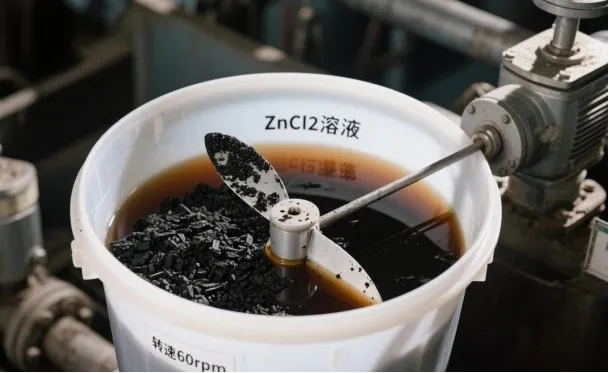
As a leading supplier of Acid Washed Activated Carbon, we offer a wide range of acid - washed activated carbon products with tailored macroporosity to meet the specific needs of our customers. Our acid - washed activated carbon is produced using high - quality raw materials and advanced acid - washing techniques to ensure consistent quality and performance.

Customized Macroporosity
We understand that different applications require different levels of macroporosity. Therefore, we can customize the acid - washing process to achieve the desired macroporosity for your specific application. Whether you need activated carbon with high macroporosity for the adsorption of large molecules or for high - flow - rate applications, we can provide a solution that meets your requirements.
High - Quality Products
Our acid - washed activated carbon products are rigorously tested to ensure their quality and performance. We use state - of - the - art analytical techniques, such as MIP and SEM, to characterize the pore structure of our products and ensure that they meet the specified macroporosity requirements. In addition, our products are compliant with international standards and regulations, ensuring their safety and reliability.
Other Related Products
In addition to our acid - washed activated carbon, we also offer other related products, such as Acid Gas Absorber Activated Carbon and Koh Impregnated Activated Carbon. These products are designed to provide enhanced adsorption performance for specific applications, such as the removal of acid gases and the adsorption of polar molecules.
Contact Us for Procurement
If you are interested in our acid - washed activated carbon products or have any questions about the impact of acid washing on macroporosity, please feel free to contact us. Our team of experts is ready to provide you with detailed information and technical support to help you select the right product for your application. We are committed to providing high - quality products and excellent customer service, and we look forward to working with you to meet your adsorption needs.
References
[Author 1], [Title 1], [Journal 1], [Year 1], [Volume 1], [Pages 1]
[Author 2], [Title 2], [Journal 2], [Year 2], [Volume 2], [Pages 2]