

As a supplier of activated carbon decolorization, I'm always on the lookout for factors that can affect the performance of our products. One such factor that has piqued my interest lately is gamma - ray irradiation. In this blog, I'm gonna dig into what gamma - ray irradiation is, and how it impacts the decolorization ability of activated carbon.
Let's start by getting a basic understanding of activated carbon decolorization. Activated carbon is a porous material with a large surface area. This unique structure allows it to adsorb various substances, including colored compounds, from liquids. That's why it's widely used in industries like food and beverage, pharmaceuticals, and water treatment to remove unwanted colors. We offer different types of activated carbon for various applications, such as Activated Carbon for Dioxin Removal, Activated Carbon for Voc Removal, and Activated Carbon for Mining Waste Water Treatment.
Now, what the heck is gamma - ray irradiation? Gamma rays are a form of high - energy electromagnetic radiation. They have a very short wavelength and a lot of energy, which makes them capable of penetrating through many materials. Gamma - ray irradiation is used in a number of fields, like sterilization in the medical industry and in the modification of materials.
So, how does gamma - ray irradiation affect the decolorization of activated carbon? Well, the irradiation can cause some physical and chemical changes in the activated carbon.
Physical Changes
Firstly, gamma - ray irradiation can change the pore structure of activated carbon. The high - energy rays can break some of the carbon - carbon bonds in the activated carbon matrix. This can lead to the collapse or enlargement of some pores. On one hand, if the pores collapse, the total pore volume and surface area of the activated carbon might decrease. A smaller surface area means there are fewer adsorption sites for the colored molecules, which could potentially reduce the decolorization efficiency.
On the other hand, if some of the pores enlarge, it might make it easier for larger colored molecules to enter the pores. This could be beneficial for the decolorization of solutions containing big - sized colored compounds. However, it's also possible that the enlarged pores might have a lower affinity for smaller molecules, which could lead to a decrease in the removal of small - sized colored substances.

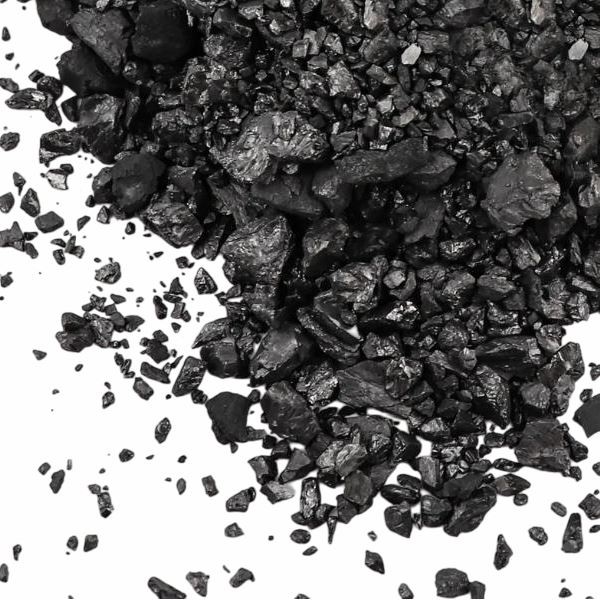
Secondly, the irradiation can cause the formation of new pores. The energy from the gamma rays can induce micro - fractures in the activated carbon, creating new voids and channels. These new pores can increase the overall surface area available for adsorption. If the newly formed pores have an appropriate size and distribution, they can improve the adsorption of colored molecules, thus enhancing the decolorization ability.
Chemical Changes
Gamma - ray irradiation can also bring about chemical changes in activated carbon. It can generate free radicals on the carbon surface. These free radicals are highly reactive and can react with oxygen in the air or other substances present in the activated carbon's environment.
The reaction with oxygen can lead to the formation of oxygen - containing functional groups on the carbon surface, such as carboxyl, carbonyl, and hydroxyl groups. These functional groups can change the surface properties of the activated carbon. For example, they can increase the hydrophilicity of the carbon surface. This might be good for the adsorption of polar colored molecules because they can interact with the polar functional groups through hydrogen bonding or electrostatic interactions.
However, the formation of these functional groups can also have a negative impact. Some of these functional groups might block the pores or change the surface charge distribution in a way that reduces the adsorption of non - polar colored molecules. Non - polar molecules have a hard time interacting with polar functional groups, and if the surface becomes too polar, the adsorption capacity for non - polar dyes or pigments could decline.
Another chemical change that can occur is the degradation of some impurity compounds or additives in the activated carbon. If the activated carbon contains some organic impurities, the gamma - ray irradiation can break them down into smaller molecules. This can potentially clean up the surface of the activated carbon and increase the effective adsorption sites.
Experimental Evidence
There have been several studies on this topic. In some experiments, researchers exposed activated carbon samples to different doses of gamma - ray irradiation. They then measured the decolorization efficiency of the irradiated and non - irradiated activated carbon samples using colored solutions like methylene blue.
The results were quite varied. At low doses of irradiation, some studies found that the decolorization ability improved. This was likely due to the formation of new pores and the activation of the carbon surface, which increased the number of adsorption sites. However, when the irradiation dose was too high, the decolorization efficiency decreased. The high - dose irradiation might have caused excessive damage to the pore structure and the formation of too many functional groups that blocked the pores or repelled the colored molecules.
Implications for Our Business
As a supplier of activated carbon decolorization products, understanding the effect of gamma - ray irradiation is crucial. If we can control the gamma - ray irradiation process properly, we might be able to enhance the performance of our activated carbon. We could potentially offer a new line of "irradiated - activated carbon" with improved decolorization properties for specific applications.
For example, if we are dealing with a client in the food industry who needs to decolorize a solution containing large - sized natural pigments, we could use gamma - ray irradiation to create larger pores in the activated carbon, making it more effective for this particular task.
On the other hand, we also need to be cautious. Over - irradiation can ruin the quality of the activated carbon. So, we need to conduct more in - house experiments to find the optimal irradiation conditions for different types of activated carbon and different decolorization applications.
Conclusion
In conclusion, gamma - ray irradiation can have both positive and negative effects on the decolorization of activated carbon. The physical and chemical changes it causes in the activated carbon can either enhance or reduce its ability to adsorb colored molecules. As a supplier, we have a great opportunity to explore this area further. By understanding and controlling the irradiation process, we can develop better - performing activated carbon products for our customers.
If you're in the market for activated carbon decolorization products and want to learn more about how our products can meet your specific needs, or if you're interested in our potential irradiated - activated carbon solutions, don't hesitate to reach out. We'd love to have a chat and see how we can work together to solve your decolorization challenges.
References
- [List of relevant scientific papers on gamma - ray irradiation and activated carbon decolorization]