

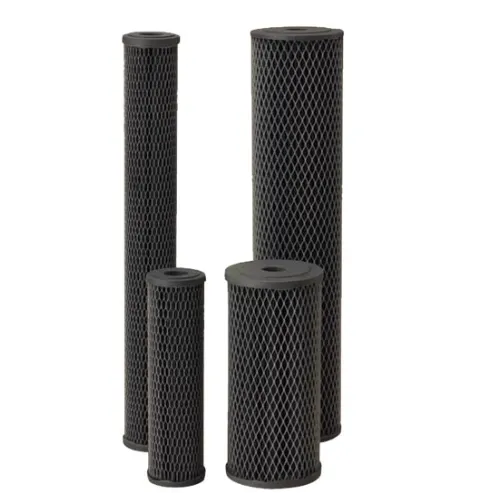
Abrasion resistance is a crucial property when it comes to activated charcoal cartridges. As a reputable supplier of Activated Charcoal Cartridges, understanding the ins and outs of this characteristic is essential for providing high - quality products.
What is Abrasion Resistance?
Abrasion resistance refers to the ability of a material to withstand wear and tear caused by rubbing, scraping, or friction. In the context of an activated charcoal cartridge, it means how well the cartridge's components, primarily the activated charcoal and its housing, can resist damage when exposed to mechanical forces.
Activated charcoal itself is a porous material. It is made by heating carbon - rich materials such as coconut shells, wood, or coal in the absence of air and then activating it to create a large surface area with numerous tiny pores. These pores are what give activated charcoal its excellent adsorption properties. However, the structure of activated charcoal can be fragile. If it is abraded, the pores can be damaged, reducing the charcoal's ability to adsorb contaminants effectively.
Factors Affecting Abrasion Resistance of Activated Charcoal Cartridges
Characteristics of Activated Charcoal
- Raw Material: The type of raw material used to make activated charcoal significantly impacts its abrasion resistance. For example, activated charcoal made from coconut shells generally has a more uniform pore structure and higher hardness compared to charcoal made from wood. Coconut - shell - based activated charcoal is more resistant to abrasion because of its dense and robust micro - structure. Suppliers often choose coconut - shell feedstock for applications where high abrasion resistance is required.
- Activation Process: The activation process can also influence the hardness and abrasion resistance of activated charcoal. Steam activation is a common method that can produce activated charcoal with a well - developed pore structure and relatively good abrasion resistance. Chemical activation, on the other hand, may result in a more fragile structure if not carefully controlled. During chemical activation, the chemicals can react with the carbon material in a way that changes its physical properties, potentially reducing its resistance to abrasion.
Cartridge Design and Construction
- Housing Material: The housing of the activated charcoal cartridge plays a vital role in protecting the charcoal from abrasion. Materials such as high - density polyethylene (HDPE) or polypropylene are commonly used because they are durable and have good resistance to physical damage. A well - designed housing should also provide proper support to the activated charcoal, preventing it from moving and rubbing against the inner walls of the cartridge, which could cause abrasion.
- Packing Method: How the activated charcoal is packed inside the cartridge affects its abrasion resistance. A tightly packed cartridge reduces the movement of the charcoal particles, minimizing the chances of abrasion between the particles themselves or between the particles and the cartridge walls. However, the packing must be balanced, as excessive packing can restrict the flow of the gas or liquid passing through the cartridge, reducing its performance.
Testing Abrasion Resistance
There are several methods to test the abrasion resistance of activated charcoal cartridges. One common approach is to use a mechanical abrasion tester. This device subjects the cartridge to a controlled amount of friction and rubbing. The cartridge is typically placed in a rotating cylinder with abrasive media, and after a set number of rotations, the amount of charcoal that has been abraded is measured.
Another method is the air - jet abrasion test. In this test, a high - velocity stream of air is directed at the cartridge, simulating the wear that might occur during the normal flow of gas through the cartridge. The change in the physical and adsorption properties of the charcoal after the air - jet test can be used to evaluate the abrasion resistance of the cartridge.
Importance of Abrasion Resistance in Different Applications
Air Filtration
In air filtration systems, activated charcoal cartridges are often used to remove odors, volatile organic compounds (VOCs), and other contaminants from the air. The cartridges are constantly exposed to the flow of air, which can cause abrasion over time. If the cartridge has poor abrasion resistance, the activated charcoal can be damaged, leading to a decrease in the filtration efficiency. This can result in the release of contaminants back into the air, compromising the quality of the indoor environment.
Water Treatment
In water treatment applications, activated charcoal cartridges are used to remove impurities such as chlorine, pesticides, and heavy metals from water. The cartridges are exposed to the flow of water, which can carry suspended particles that may cause abrasion. A cartridge with good abrasion resistance can maintain its integrity and adsorption capacity over a longer period, reducing the frequency of cartridge replacement and ensuring consistent water quality.
Industrial Processes
In industrial settings, activated charcoal cartridges are used in various processes such as gas purification and solvent recovery. These applications often involve harsh operating conditions, including high - pressure gas flows and the presence of abrasive particles. A cartridge with high abrasion resistance is essential to withstand these conditions and provide reliable performance.
Our Approach as an Activated Charcoal Cartridge Supplier
As a supplier of Activated Charcoal Cartridges, we take several steps to ensure the high abrasion resistance of our products.
First, we carefully select the raw materials for our activated charcoal. We primarily use high - quality coconut shells as the feedstock because of their excellent abrasion resistance properties. Our manufacturing process includes a strict quality - control system to ensure that the activation process produces activated charcoal with a uniform and robust structure.
Second, we pay close attention to the design and construction of our cartridges. We use high - quality housing materials and advanced packing techniques to provide optimal protection for the activated charcoal. Our cartridges are designed to minimize the movement of the charcoal particles and to withstand the mechanical forces associated with different applications.
Finally, we conduct rigorous testing on our products to ensure that they meet or exceed industry standards for abrasion resistance. We use a combination of mechanical and air - jet abrasion tests to evaluate the performance of our cartridges and to continuously improve our manufacturing processes.
Conclusion
The abrasion resistance of an activated charcoal cartridge is a critical property that directly affects its performance and durability in various applications. Understanding the factors that influence abrasion resistance, such as the characteristics of the activated charcoal, cartridge design, and construction, is essential for producing high - quality cartridges.
If you are in the market for activated charcoal cartridges that offer excellent abrasion resistance and reliable performance, we invite you to contact us for more information and to discuss your specific requirements. We are committed to providing the best - in - class products and solutions to meet your needs.
References
- "Activated Carbon: Surface Chemistry, Adsorption and Catalysis" by Radek Šolcová and Petr Janda
- "Water Treatment Unit Processes: Physical and Chemical" by George Tchobanoglous, Franklin Burton, and H. David Stensel
- Industry standards for activated charcoal cartridge testing and performance evaluation.