

Hey there! As a supplier of Koh Impregnated Activated Carbon, I'm super excited to share with you the latest research trends in this amazing product. Koh Impregnated Activated Carbon has been making waves in various industries, and staying on top of the research can give us all a competitive edge.
First off, let's quickly understand what Koh Impregnated Activated Carbon is. It's a type of activated carbon that has been treated with potassium hydroxide (KOH). This treatment enhances its properties, making it more effective in a wide range of applications.
Adsorption Capabilities
One of the hottest research trends right now is focused on the adsorption capabilities of Koh Impregnated Activated Carbon. Scientists are constantly looking for ways to improve its ability to adsorb different types of pollutants, such as heavy metals, organic compounds, and gases.
For example, recent studies have shown that Koh Impregnated Activated Carbon can be highly effective in removing mercury from water. Mercury is a toxic heavy metal that can cause serious health problems, so finding efficient ways to remove it is crucial. The unique surface properties of Koh Impregnated Activated Carbon allow it to attract and bind to mercury ions, effectively removing them from the water.
Another area of research is the adsorption of volatile organic compounds (VOCs). VOCs are harmful chemicals that are released into the air by various sources, such as paints, solvents, and industrial processes. Koh Impregnated Activated Carbon has shown great potential in adsorbing VOCs, which can help to improve indoor air quality and reduce environmental pollution.
Catalytic Properties
In addition to its adsorption capabilities, Koh Impregnated Activated Carbon also has some interesting catalytic properties. Recent research has been exploring its use as a Carbon Based Catalyst in various chemical reactions.
For instance, it can be used in the catalytic oxidation of pollutants. This process involves the use of a catalyst to speed up the oxidation reaction of pollutants, converting them into less harmful substances. Koh Impregnated Activated Carbon has been found to be an effective catalyst for the oxidation of certain organic pollutants, which could have significant applications in environmental remediation.
Surface Modification
Surface modification is another important research trend in Koh Impregnated Activated Carbon. Scientists are looking for ways to modify the surface of the carbon to enhance its performance in specific applications.
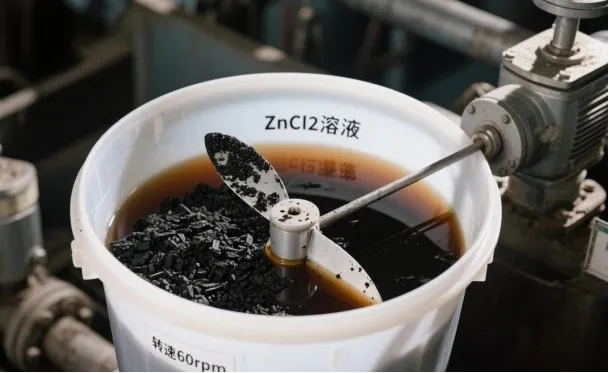

One approach is to introduce functional groups onto the surface of the carbon. These functional groups can interact with specific pollutants, improving the adsorption or catalytic properties of the carbon. For example, introducing nitrogen-containing functional groups can enhance the adsorption of some acidic gases.
Applications in Energy Storage
The energy storage sector is also starting to take notice of Koh Impregnated Activated Carbon. It has shown potential in applications such as supercapacitors and batteries.
In supercapacitors, Koh Impregnated Activated Carbon can be used as an electrode material. Its high surface area and good electrical conductivity make it a promising candidate for improving the performance of supercapacitors, such as increasing their energy density and charging speed.
Comparison with Other Impregnated Activated Carbons
It's also interesting to compare Koh Impregnated Activated Carbon with other types of impregnated activated carbons, like Silver Impregnated Activated Carbon.
Silver Impregnated Activated Carbon is known for its antibacterial properties and is often used in water purification and air filtration applications. While Koh Impregnated Activated Carbon has its own unique set of properties, such as enhanced adsorption and catalytic capabilities, comparing the two can help to determine the most suitable carbon for a specific application.
Production and Sustainability
From a production perspective, research is being done to develop more sustainable and cost-effective methods of producing Koh Impregnated Activated Carbon. This includes finding alternative sources of raw materials and optimizing the impregnation process.
Sustainability is a big concern these days, and making sure that the production of Koh Impregnated Activated Carbon is environmentally friendly is crucial. By using renewable raw materials and reducing energy consumption during production, we can make this product even more attractive to environmentally conscious customers.
Conclusion
So, there you have it – the latest research trends in Koh Impregnated Activated Carbon. From improving its adsorption capabilities to exploring its applications in energy storage, the future looks bright for this amazing product.
If you're interested in learning more about our Koh Impregnated Activated Carbon or discussing potential applications for your specific needs, don't hesitate to reach out to us. We're here to help you find the best solution for your business.
References
- Zhang, X., et al. "Enhanced mercury removal by KOH-activated carbon nanofibers." Journal of Hazardous Materials.
- Li, Y., et al. "Catalytic oxidation of volatile organic compounds over KOH-activated carbon catalysts." Chemical Engineering Journal.
- Wang, H., et al. "Surface modification of activated carbon for heavy metal adsorption." Carbon.